Reviewed by the Penny Time editorial team
Part of our Money Skills hub.
A Money Game for Ages 8 to 11, Plus the Debrief That Makes It Stick
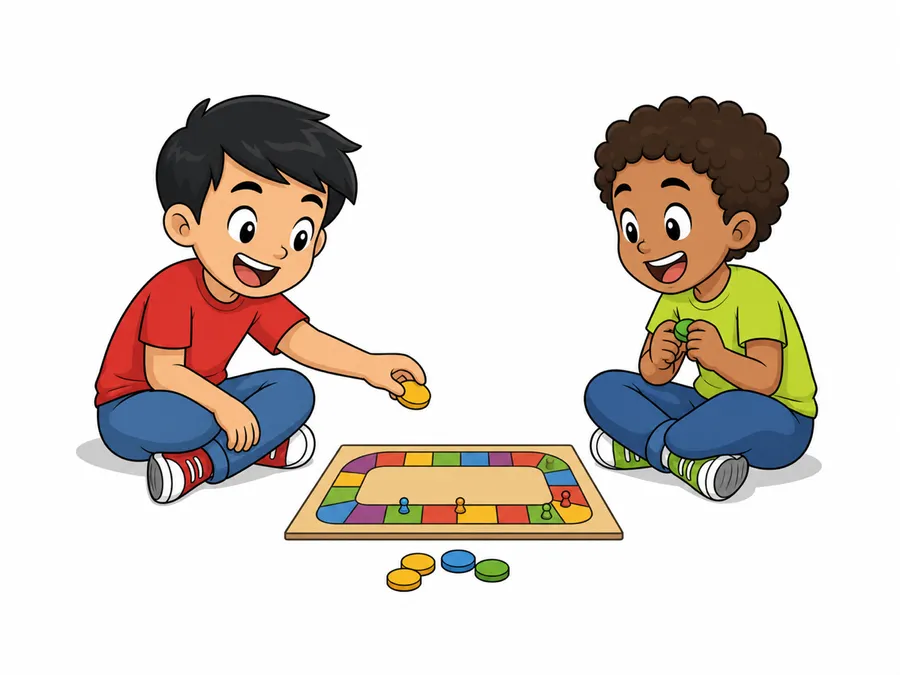
Search "money games for kids" and you get lists. Twenty games, ten games, best free games of the year. Almost none of them are a game you can play right now, and none of them tell you what to say to your child when the game ends. That second part turns out to be the part that matters.
This page points you to free games that fit the 8 to 11 band, gives you the debrief script that makes the play worth something, and explains what the research does and does not support.
Why ages 8 to 11 is the gap
Money games cluster at two ends. On one end: coin identification, counting to a dollar, cash-register drills. These are built for ages 5 to 8, and a nine-year-old finishes them in four minutes and never returns. On the other end: budgeting simulators with rent, insurance premiums, and paycheck deductions. These are built for ages 14 and up, and an eight-year-old has no lived reference for a utility bill.
The 8 to 11 band needs something else. At this age a child usually has some money of their own, from allowance, birthdays, or a chore arrangement, and the real decisions they face are small and repeated: spend the 12 dollars now on the thing at the checkout, or hold it for the thing they said they wanted last month. That is a tradeoff problem, not an arithmetic problem. Counting coins does not rehearse it. Neither does calculating a mortgage.
So the game to look for is built around repeated small tradeoffs under a fixed budget, with prices and wants that a nine-year-old recognizes, and with consequences that show up two or three rounds later rather than immediately.
What the research actually says
Two studies shaped how we built this.
Platz and Juttler (2022), published in Citizenship, Social and Economics Education, ran an analog money game followed by a class debrief with 50 high school students and measured how interested they were in the subject. Students who came in already motivated to learn about money got the most out of it. The study did not test the game against the debrief, so it cannot say which part did the work. We built the debrief in anyway: a game handed to a child alone, with no conversation attached, is closer to entertainment than education.
That is why the parent debrief below is not an optional extra on this page. It is the actual product. The game exists to generate three or four decisions worth talking about.
The second study is Alotaibi (2024), in Frontiers in Psychology, a meta-analysis of 136 studies on game-based learning. It found a moderate positive effect on cognitive outcomes, with a Hedges g of 0.46. Worth citing, with two caveats we will not bury: it covers ages 3 to 8, which is younger than our target band, and it measures general learning outcomes, not financial ones. Nobody has run a 136-study meta-analysis on money games for nine-year-olds. Anyone telling you the evidence for financial literacy games is settled is overselling it.
Our honest read: games plausibly help, the debrief is the part with the most direct support, and the effect sizes in this space are moderate rather than dramatic.
Which game to play
Any of these free games works for the debrief below. None needs an account, and each takes about five minutes.
- Grocery budget game. A fixed budget (25 dollars at the 8 to 10 level) and realistic grocery prices. The best match for the tradeoff questions below.
- Lemonade stand game. A seven-day business sim for ages 8 to 10. Buying supplies early shapes what happens later, so the delayed-consequence question lands.
- Counting money game. A warm-up for kids who still hesitate over coins and making change. Skip it if that is already easy.
What makes a game worth the debrief, if you are choosing a different one:
- A fixed budget. The money runs out, and the running total is always visible.
- No losing. A child who spends everything early still finishes. They just watch their options narrow, which is the lesson.
- Delayed consequences. Some choices only pay off or hurt a few rounds later.
- Prices in kid units. Roughly 2 to 30 dollars, the range an 8 to 11 year old actually reasons about.
- Replayable. The second run is usually the interesting one, because the child now plays against their own first attempt.
The debrief: five questions after the game ends
Do this within a few minutes of the last round, while the decisions are still fresh. It takes about five minutes. Ask, then wait, and resist filling the silence.
- Which purchase are you happiest about? Start positive. You are looking for whether they justify it by enjoyment, by price, or by usefulness.
- Which one would you take back? Almost every player has one. Naming a regret out loud is the whole exercise.
- Was there a moment you wished you had more money left? This is where the delayed-consequence items surface without you having to explain the mechanic.
- If you played again, what would you do differently in the first three rounds? Early-round discipline is the transferable habit. This question names it.
- Is there anything in real life this reminds you of? The bridge question. Do not force an answer. If they say no, let it go and try again next time.
Two things to avoid: do not correct their choices during play, and do not turn the debrief into a lecture on saving. Keep the debrief to questions and save any lesson for another day.
Where to go after the game
The game rehearses tradeoffs. These tools carry the same ideas into real money:
- Wants vs needs sorter gives the tradeoff a vocabulary, which is what most 8 to 11 year olds are missing rather than the concept itself.
- Allowance calculator for setting an amount that gives a child enough to make real decisions with, which is what makes the game's lesson usable at home.
- Birthday money calculator for the lump-sum moment, when a child suddenly holds more money than usual and has no plan for it.
- Chore chart if the money in question is earned rather than given.
- Budget planner as the natural next step around age 11 or 12, once repeated tradeoffs stop being novel.
How often to play
Once a week is plenty, and honestly once a month with a real debrief beats weekly play with none. The failure mode here is treating the game as the intervention. It is not. It is a five-minute prompt for a five-minute conversation, and the conversation is the part with evidence behind it.
If your child asks to play it a third time in one sitting, let them, and skip the debrief on the extra rounds. Nothing kills a game faster than a quiz after every session.
Frequently Asked Questions
-
Ages 8 to 11. Prices sit between 2 and 30 dollars and every decision is a spend-or-hold tradeoff rather than a coin-counting exercise. Younger children usually need coin recognition first, and children 12 and older tend to be ready for a full budget planner with categories and income.
-
The evidence is moderate rather than conclusive. Alotaibi (2024) in Frontiers in Psychology pooled 136 studies on game-based learning and found a Hedges g of 0.46 for cognitive outcomes, though that work covers ages 3 to 8 and general learning, not finance specifically. A smaller study, Platz and Juttler (2022), ran a money game plus a class debrief with 50 high school students and found it sparked the most interest in students who were already motivated to learn about money, so start from what your child is curious about.
-
A game generates decisions; the conversation is what turns those decisions into something a child can name and reuse. Five questions in five minutes is enough.
-
For most 8 to 11 year olds, the grocery budget game or the lemonade stand game. Both give a fixed amount of money, a series of choices, and results that depend on earlier decisions. Both are free, need no signup, and run in the browser. The counting money game is a warm-up for kids who still hesitate over coins and change.
-
Once a week at most, and once a month with a real debrief beats weekly play with no conversation. The game takes about five minutes and the debrief about five more. If your child wants extra rounds in one sitting, let them play and skip the questions on the repeats.

Raise kids who understand how money works
Download the app, add your child, and connect their phone or tablet by scanning a code. About a minute, no email needed for kids.


How setup works for you and your child →
No ads. No data selling. No credit card.
Put this into practice this week
Add your child in Penny Time and, on their own phone or tablet, they can watch a real balance grow, take on quests, and ask for cash-outs you approve. Free for the whole family.