Wants vs needs sorting game
Can your child tell the difference between a want and a need? Pick an age group, then sort each item into the right bucket.
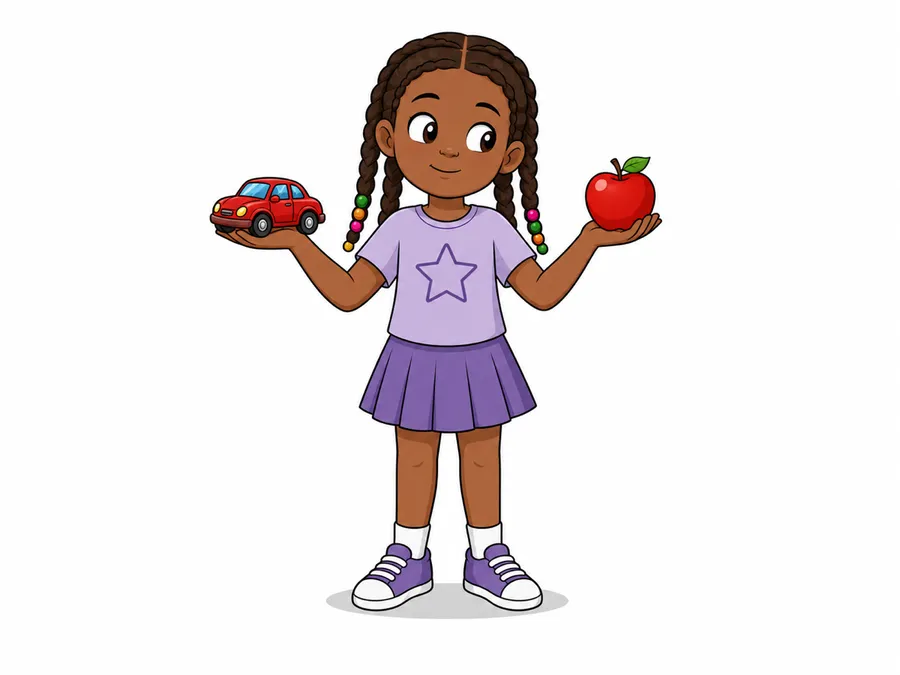
What is the difference between wants and needs for kids?
A need is something your child must have to stay healthy, safe, and able to function: food, water, shelter, basic clothing, medicine, hygiene supplies, and the tools required for school. A want is something nice to have but possible to live without: candy, toys, video games, brand-name clothes, theme park tickets, and the newer version of something they already own. The simplest test for younger kids, and the one behind Penny Time's sorting game: if you stopped having it tomorrow, would you be hurt, or just disappointed?
The Consumer Financial Protection Bureau lists wants versus needs as one of the earliest money skills children can build, usually starting around ages 5 to 7. Many items live in a gray area on purpose. A phone is a need for a kid walking home alone but a want when the family is always together. Shoes are a need; the latest sneakers when the old pair still fits are a want. Working through those edge cases is where the real learning happens, and it builds the judgment kids will use later when budgeting their own allowance.
Practice wants vs needs for real
Penny Time gives kids a real balance to spend and save every week.


Sort this item:
Needs
Wants
Sorted the list? Now let them practice with real money.
Penny Time gives your child a real balance to spend or save, with your approval on every cash-out. Free for the whole family.
Common wants vs needs by age
Use this needs vs wants chart as a quick reference or a printable sorting chart. Project it for the class or print the page so each child has the same list of examples to sort by age.
| Age | Needs (examples) | Wants (examples) |
|---|---|---|
| 5-7 | Food, water, warm clothes, shelter | Toys, candy, stickers, extra screen time |
| 8-10 | Groceries, school supplies, dentist visit | Skateboard, movie tickets, trading cards |
| 11-14 | Textbooks, PE shoes, bus fare, hygiene | Gaming console, streaming, brand-name clothes |
Wants vs needs at a glance
- Ages 5 to 7 can grasp the basics: the CFPB places "needs vs wants" in its earliest financial-skills milestone, alongside understanding that money is used to buy things. Keep it concrete: food, water, shelter, clothing.
- By age 8 to 10, kids handle gray-area items: a phone, a backpack, a haircut. The same item can be a need or a want depending on context. This is where most teaching conversations happen.
- US household spending: about 50% needs, 30% wants, 20% saving: the 50/30/20 budget rule popularized by Elizabeth Warren and Amelia Warren Tyagi in their book All Your Worth. Show kids this split with a real grocery receipt.
- Average kids' weekly allowance: $9 to $12 in the US: per RoosterMoney and AICPA family surveys. Even at $10 a week, sorting purchases into wants and needs is the foundation for every later budgeting decision.
How do you teach a 7-year-old the difference between wants and needs?
Walk through their day. The cereal at breakfast is a need; the sugary cereal instead of the plain one is a want. School shoes are a need; light-up shoes with their favorite character are a want. Use real items they recognize. Five or six examples in one sitting is enough at this age.
Why is teaching wants vs needs important?
Every budgeting decision later in life comes back to this one skill. Kids who can name the difference make more deliberate choices with their allowance, save more for goals they care about, and avoid the impulse traps that keep many adults in credit card debt. It is the foundation of personal finance.
Teaching kids the difference between wants and needs
Understanding wants vs needs is the first real money concept most kids can grasp. Before budgeting, before saving, before investing, a child needs to know that not every dollar has the same job. Some go toward survival, and some go toward fun.
The Consumer Financial Protection Bureau lists this as one of the earliest money skills children can develop. Kids who learn to sort spending early tend to make more deliberate choices with their allowance and, later, with their own money. Put it to work in the real world by letting them run the back-to-school supply budget.
How to use this sorting game
Pick the age group that matches your child, then work through the items together. Each item appears one at a time. Tap "Need" or "Want" to sort it. At the end, you'll see how many they got right and which ones tripped them up. The tricky items are usually where the conversation starts.
When the answer isn't black and white
Some items land in a gray area on purpose. A phone might be a need for safety, but the latest model is a want. Shoes are a need, but a brand-name pair when the old ones still fit is a want. These edge cases are the whole point. They teach kids to think critically about why they want something, not just what they want.
Making it stick
After the sorting game, try this at the grocery store: pick a few items and ask your child, "Want or need?" The goal is for them to start asking it themselves, without you prompting.
Penny Time reinforces this concept every time your child decides how to manage their allowance as one real balance they spend or save.
Wants vs needs examples for every age
The tricky part about wants vs needs is that the same item can be either one depending on the situation. A phone is a need when a child walks home alone after school. The latest model with the best camera is a want. These gray areas are where the real learning happens.
Here are common items that spark good conversations at each age, along with when they count as a need and when they tip into want territory.
Ages 5-7: Everyday items
Shoes - Need when their current pair is too small or worn out. Want when they already have shoes that fit but want a pair with their favorite cartoon character on them.
A snack after school - Need if they haven't eaten since lunch and dinner is two hours away. Want if they just finished a full meal and spotted cookies in the pantry.
A jacket - Need when it's cold outside and they don't have one that fits. Want when they already own a warm coat but prefer the color of a new one.
Books - Need for school reading assignments. Want when they have a library card and want to own a copy instead.
A birthday present for a friend - This one starts good conversations. Kids usually feel it's a need because of social expectations, but it's technically a want. Discuss what "need" really means.
Ages 8-10: Trickier calls
A phone - Need if they walk to school alone or stay home after school and parents need to reach them. Want if a parent is always nearby and the real reason is games and group chats.
A backpack - Need for carrying school supplies. Want when the current backpack works fine but a branded one is more popular at school.
Sports equipment - Need if required for a team or PE class. Want if they already have working gear but prefer a newer model.
Art supplies - Need for school art projects with specific requirements. Want when they have supplies at home and just want the fancier set.
A haircut - Need when hair is causing hygiene or practical issues. Want when they got a cut last month but prefer a trendy new style.
Ages 11-14: Real-world complexity
Internet access - Need for homework and school research. Want when the real usage is social media and streaming shows.
Name-brand clothes - Need if they genuinely need clothes and the store brand is the same price. Want when they have a full closet but want a specific label for status.
Lunch money - Need for basic nutrition during the school day. Want when they skip the packed lunch from home to buy pizza and chips instead.
A computer - Need if school requires typed assignments and there's no shared device available. Want if the family has a working computer and they want their own for gaming.
Deodorant vs. cologne - Deodorant is a hygiene need. Expensive cologne or perfume is a want. This example clicks quickly with older kids because the line is clear.
How to practice wants vs needs at the store
Sorting cards on a screen is a good start, but the concept sticks when kids practice it in the real world. A grocery trip is the perfect classroom.
Before your next shopping trip, give your child a copy of the shopping list. Ask them to put a "W" next to anything they think is a want and an "N" next to anything they think is a need. Don't correct them during the marking - let them commit to their answers first.
Walk the store together and talk through the list as you go. Bread? Most kids will say need, and they're right. Cookies? Usually a want. But what about the cereal? Is it a need because it's breakfast food, or a want because there are cheaper options that work just as well?
The gray areas are the whole point. When your child argues that chocolate milk is a need because they need calcium, you're having the right conversation. Regular milk fills the need. The chocolate part is the want.
Try this at different stores too. A clothing store works well for older kids. They need shoes for school - that's clear. But do they need the $120 pair, or does the $40 pair meet the actual need? The difference between those two prices is the cost of the "want" part.
You can also flip the exercise. Give your child $10 at the store and ask them to buy one need and one want. They have to explain their choices at checkout. This forces them to prioritize and makes the sorting feel real because their own money is on the line.
The goal isn't to eliminate wants. Everyone buys wants, and that's fine. The goal is for your child to know the difference before they spend, so they can make that choice on purpose instead of by accident.
Free printable wants vs needs worksheet
Want a paper version? Here is a free wants vs needs worksheet you can use at home or in class. Read each item, decide whether it is a need or a want, and write N or W next to each number. Print this page or copy the list onto paper. The answer key sits right below the list, with notes on the items that can go either way.
- A winter coat when it is cold and you do not have one
- The newest video game
- Drinking water
- A second pair of light-up sneakers
- Lunch on a school day
- Candy at the checkout line
- Soap and a toothbrush
- A phone for a kid who walks home alone
- School supplies the teacher requires
- A streaming subscription
- A visit to the dentist
- Brand-name headphones
- A warm, safe place to sleep
- A birthday gift for a friend
- A backpack that fits your school books
Answer key
Clear needs: 1, 3, 5, 7, 9, 11, and 13. Clear wants: 2, 4, 6, 10, and 12. Items 8, 14, and 15 are the ones worth talking through.
- 8. A phone. A need for a child who walks home alone or stays home without an adult, because it keeps them safe. A want when a parent is always nearby and the real use is games and group chats.
- 14. A birthday gift for a friend. Many kids call this a need because of social pressure, but you can live without it, so it counts as a want. A good chance to separate a want that matters to you from a true need.
- 15. A backpack. A need if the child has no bag that fits their books. A want when a working backpack is already in the closet and a trendier one is the real goal.
There is no single correct grade here. If your child can explain why an item is a need or a want, the worksheet did its job. For a classroom version, see our free financial literacy resources for teachers.
The 2-minute needs and wants challenge
This is a quick warm-up that works at home or in class, and it needs only paper and a timer. Run it before the sorting game so kids start from their own lives instead of a ready-made list.
- Set a timer for two minutes.
- Have each child type or write as many of their needs and wants as they can.
- When the timer ends, they mark each item N for need or W for want.
- Swap lists with a partner and circle any item you would have marked differently.
- Talk through the circled items, then play a round of the game above to check.
If the list leans heavily toward wants, that is a good opening for a talk about where their allowance actually goes.
How to use the wants vs needs game in the classroom
Teachers can run this needs and wants sorting activity as a whole-class or small-group lesson in about ten minutes, free and with no sign-up. It fits a personal-finance unit, a math lesson on spending, or a morning meeting. For kindergarten and early elementary, stick to the ages 5 to 7 list so every item is one kids already recognize. Here is a simple way to run it.
- Project and vote. Put the game on the board, read each item aloud, and have students vote need or want with a show of hands before you sort it. Split votes are your cue to pause and discuss.
- Small groups. Divide the class into groups of three or four. Each group sorts one age round, then explains two of its choices to the class. The reason matters more than the score.
- Debate the gray areas. Items like a phone, a backpack, or name-brand clothes have no single answer. Ask students to argue both sides. This is where the thinking sticks.
- Follow up on paper. Hand out the printable worksheet above so each student sorts a fresh set of items on their own, then compare answers as a group.
For a related classroom activity, the grocery budget game puts the same needs-first thinking into a pretend shopping trip with a fixed budget.
Related guide: Once your child knows which spending is a want and which is a need, our allowance chore chart with prices shows how much they can earn per chore to fund the wants themselves.
Frequently Asked Questions
-
Most children can start grasping the concept around age 5 or 6. At that age, keep it simple: food is a need, a toy is a want. By age 8 or 9, kids can handle trickier items where the answer depends on context, like whether a phone is a want or a need.
-
Start with the basics: needs are things you must have to stay healthy and safe, like food, water, shelter, and clothes. Wants are things that are nice to have but you can live without, like video games, candy, and new sneakers when your old ones still fit. Use real examples from your child's day.
-
Understanding wants vs needs is the foundation of budgeting. Kids who can tell the difference make better spending decisions with their allowance. The Consumer Financial Protection Bureau lists it as one of the earliest money skills children can learn.
-
Yes, and those are worth focusing on. A basic lunch is a need, but a fancy restaurant meal is a want. Shoes are a need, but designer sneakers are a want. Ask your child why they want something: is it for survival and health, or for fun and status?
-
For a classroom, needs are the things every student must have to learn and stay healthy: food, water, a safe place to live, weather-appropriate clothes, the school supplies a class requires, and basic hygiene items. Wants are the extras, like snacks beyond lunch, video games, brand-name clothes, and the newest phone. The most useful discussion starters are the gray-area items, such as a phone or a backpack, where the answer depends on the situation.
-
Yes. The sorting game on this page works as a whole-class or small-group activity, and it is free with no sign-up. Project it on the board and have students vote need or want before you reveal the answer, or split the class into small groups and let each group sort a round and defend its choices. The gray-area items are where the best debates happen.
-
Give your child a shopping list or a stack of picture cards and have them label each item as a want or a need, then talk through the ones they found hard. The printable worksheet on this page does exactly that on paper. The goal is not a perfect score. It is the conversation about the items that could go either way.
-
There is a free printable worksheet on this page. It lists 15 everyday items for your child to label as a need or a want, with an answer key and notes on the tricky ones. Print the page or copy the list by hand, then compare answers together afterward.
-
Yes. This page is a free needs and wants sorting activity you can run with no sign-up. Project the game and have the class vote need or want before each reveal, or print the chart above and let small groups sort a round and defend their choices. The gray-area items spark the best discussion.
-
Keep it concrete and short. For kindergarten, use the ages 5 to 7 list: food, water, a warm coat, and a bed are needs, while candy, toys, and stickers are wants. Sort five or six familiar items in one sitting and ask why each one is a need or a want. The chart on this page gives you a ready set of kindergarten-friendly examples.
-
It is a sorting game: your child sees one item at a time and decides whether it is a need or a want. The version on this page is free, runs in the browser with no sign-up, and has three age rounds (5-7, 8-10, and 11-14), so younger kids get familiar items and older kids get trickier ones like a bus pass or a smartwatch.
-
Set a two-minute timer and have each child write down as many of their own needs and wants as they can. When time is up, they mark each item N or W, then compare lists with a partner or the class. Items that people marked differently are the ones to talk about.

Raise kids who understand how money works
Download the app, add your child, and connect their phone or tablet by scanning a code. About a minute, no email needed for kids.
How setup works for you and your child →
No ads. No data selling. No credit card.
Last updated: